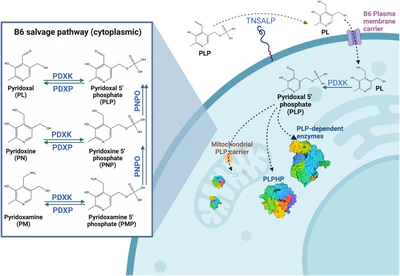
B6 responsive seizures
Our primary research is focused on PDE-ALDH7A1 defciency which is only one of the vitamin B6 responsive seizure disorders. In addition to the known genetic B6 responsive disorders, a number of patients with idiopathic seizures respond to vitmain B6 supplementation. We are focused on both identification of novel genetic causes and understanding general mechanism of these disorders.
- 🧬 Genomic studies to identify novel genes [Enroll]
- 🧬 Tissue specific LC-MS/MS quantification of B6 vitamers
- 🧬 Disesase specific LC-MS/MS quantification of B6 vitamers
- 🧬 The role of vitamin B6 in idopathic seizure disorders
Nonketotic hyperglycinemia
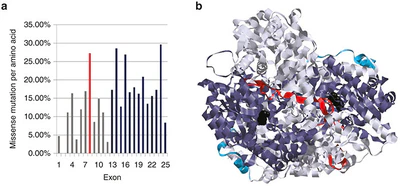
We collaborate with Professor Johan Van Hove’s laboratory to study Nonketotic Hyperglycinemia (NKH). We initially characterized mutations in the genes GLDC and AMT that cause classic NKH, and described biomarkers (imaging, genetic, and metabolities) that may aid prognosis. We continue to collaborate with the Van Hove lab to understand the impact of vitamin B6 and evaluate novel therapies.
- 🧬 Genetic basis of classic NKH [Link]
- 🧬 Neurodevelopmental outcomes in NKH [Link]
- 🧬 Brain imagining and phenotype in NKH [Link]
- 🧬 Biochemical and molecular predictors of prognosis [Link]
Rare metabolic epilepsies
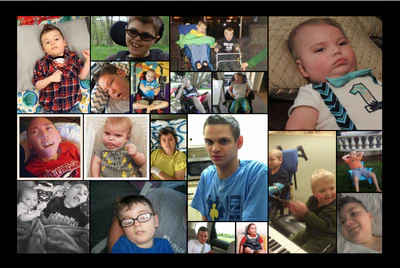
We collaborate with several clinicican-scientists who are studying metabolic epilepsies. HCFC1 is a transcriptoinal regulator and mutations in HCFC1 can cause a severe neurologic phentoype, seizure or infantile spasms, and abnormal cobalamin metabolism. Along with Professors Shaikh and Van Hove, we described HCFC1 deficiency and showed that this disorder can mimic abnormal biochemistry of NKH. We also described the inital patient with CARS2 encephalopthay, a mitochondrial disorder that can present with epileptic encephalopathy, and a novel biomaker for ECHS1 where patients have leigh syndrome and seizures.
- 🧬 A rare X-linked cobalamin disorder: HCFC1 [Link]
- 🧬 HCFC1 and elevated CSF glycine and MMA levels [Link]
- 🧬 Mutations in CARS2 leads to a severe epileptic encephalopathy [Link]
- 🧬 The clinical and biochemical charecterization of ECHS1 defciency [Link]
Coughlin Research Laboratory Overview
We are a translational research laboratory. We combine rigorous scientic methods with patient engagement approaches.
Natural History Studies
Clinical outcomes help us prioritize research goals and provide critical control data in clincial trials
Record of Collaboration
Collaboration with clinician-scientists advance research goals and speed translation of results to the bedside
Engagement Stratagies
Partnerships with families help ensure our research goals are patient-centered and clinically meaningful
Model Systems for Rare Disease
Animal and human model systems are used to interrogate disease mechansim and novel treatments
Omics Expertise
Experience in genomics, metabolomics, and proteomics with a focus on disease mechanism
Spectroscopy Laboratory
Analytical instrumentation with a focus on quantitative mass spectrometry approaches
Contact Us
Mailing Address
University of Colorado Anschutz
12800 E. 17th Ave
RC1 North, P18-3401A
Mail stop 8313
Aurora, CO 80045