Clinical Research
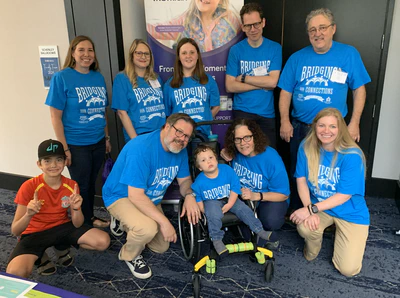
Newborn screening (NBS) dramatically changed the natural history of GA1, although many patients continue to have devestating symptomes. We aim to understand the post NBS natural history of GA1 including the number of patients who have a basal ganglia injury and non-strital symptoms. This data is critial in developing future treatments. This work is funded by NIH (ROAR consoritum) and Alnylam Pharmaceuticals. We also work closely with patient and advocay groups to accomplish these goals.
- 🏥 Understanding the risk of striatal necrosis
- 🏥 Evaluating extra striatal symptoms
- 🏥 The Organic Aciddmia Associtaion [Link]
- 🏥 The Rare Organic Acidemia Research Consortium [Link]
Basic Research
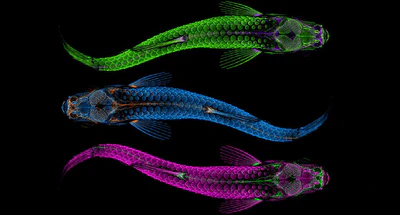
We focus on underlying disease mechansim of GA1 and how abnormal metabolism impacts disease phenotype. Our research utilizes a zebrafish model which has several advantages to studying this glial cell disorder. We also collaborate with scientist to evalute novel genetic and cellular therapies for GA1. This work is currently funded internally.
- 🧬 Animal models to study metabolic dysfunction
- 🧬 Biomarkers associated with clinical outcomes
- 🧬 Evaluation of novel treatments such as subtrate reduction
- 🧬 Translation of research results to clinical partners

Stephen I. Goodman, MD
Professor Goodman was a leader in the field of inborn errors of metabolism and founding member of the Society of Inherited Metabolic Disorders (SIMD). Over his distingused 55 year carreer, his primary research focus was glutaric aciduria type 1 and 2. Among other accomplishements, he described the first patient with GA1, identified the gene GCDH, and described the enzyme deficiency in GA1. He developed a mouse model that is still used by several scientist to study GA1. He was invovled in many clinical studies describing the features of patients and development of the initial guidelines for management.
- 💊 Decribed the first patients with GA1 [Link]
- 💊 Identification of the gene for GA1 [Link]
- 💊 Charecterized the first mouse model for GA1 [Link]
- 💊 Initial guideline for diagnosis and management of GA1 [Link]
Coughlin Research Laboratory Overview
We are a translational research laboratory. We combine rigorous scientic methods with patient engagement approaches.
Natural History Studies
Clinical outcomes help us prioritize research goals and provide critical control data in clincial trials
Record of Collaboration
Collaboration with clinician-scientists advance research goals and speed translation of results to the bedside
Engagement Stratagies
Partnerships with families help ensure our research goals are patient-centered and clinically meaningful
Model Systems for Rare Disease
Animal and human model systems are used to interrogate disease mechansim and novel treatments
Omics Expertise
Experience in genomics, metabolomics, and proteomics with a focus on disease mechanism
Spectroscopy Laboratory
Analytical instrumentation with a focus on quantitative mass spectrometry approaches
Below are select publications that highlight our work on GA1. Our other mansucripts are avaiable in the publication section of this website and on public databases such as Google Scholar.
Bernstein L, Coughlin CR, Drumm M, Yannicelli S, Rohr F. Inconsistencies in nutritional management of glutaric aciduria type 1: An international survey. Nutrients. 2020 Oct 16;12(10):E3162 Link
Coughlin CR 2nd (2022) Glutaric Aciduria Type I: Diagnosis and Management. In: L Bernstein, F Rohr, S van Calcar (eds). Nutrition Management of Inherited Metabolic Diseases: Lessons from Metabolic University 2nd edition. pp. 277-284. Cham, Switzerland: Springer Nature. Link
Articles highlighed from Dr. Micheal Woontner
Goodman SI, Woontner M. And explanation for metabolite exretion in high- and low-excretor patietns with glutaric acidemia type 1. Mol Genet Metab. 2019 Aug;127(4):325-326 Link
Woontner M, Crini LS, Koeller DM. Analysis of the expression of murine glutaryl-CoA dehydrogenase: in vitro and in vivo studies. Mol Genet Metab. 2000 Feb;69(2):116-22. Link
Contact Us
Mailing Address
University of Colorado Anschutz
12800 E. 17th Ave
RC1 North, P18-3401A
Mail stop 8313
Aurora, CO 80045